The name is hard to pronounce, the city is easy to love. The food is hard to recreate, but the flavors are easy to enjoy. Its a lot easier to get here than you may think, and once you’ve been, its even harder not to return.
Oaxaca had been calling my name for a long time. Every cook book and food show praised the glory of Oaxacan food and cultural liveliness. The anthropology department at my alma mater took students there every year as a part of a cultural exchange and study program. Every grad student I spoke to was enamored with the place. Long before it was on the digital nomad trail, it was on my mind as a far-away, somewhat exotic location – of which it is actually neither.
When paired with a flight into Mexico City from LAX, Oaxaca is only about $400 and 4 hours away. It’s both a city and a region, we visited the city but there is plenty to do should you decide to get out of town for awhile as well.
Home of the Zapotec, the ancient ruins at Monte Alban hold a societal secret that archaeologists and social scientists have still yet to unravel. Around 500 BC, for whatever reason, groups of previous rivals came together to construct this mountain ceremonial site and city in the valley below. Monte Alban became the largest city in the region for the next 500 years. The Zapotec had a close link to the megacity of Teotihuacan to the north as an “ex-pat” community is clearly identifiable as one of the many ethnic neighborhoods that compose the mega city of “Teo.”
Below: Monte Alban “Ɪ” shaped ball court, a hallmark of Mesoamerican civilization


Above: The ancient civic center of Monte Alban with its ceremonial pyramids
Modern day Oaxaca is an entirely walkable city for tourists. This was a huge contrast to Mexico City which was a vast expanse of neighborhood after neighborhood. Oaxaca is human scale. No skyscrapers, just the church towers overhead. In a way, it reminded me of Florence.
Its hard to capture in words the moment you first encounter a wedding coming down the street. You hear them first – the music, laughter, and shouts of joy – before you ever see the larger-than-life paper mache heads coming towards you. Dozens to hundreds of people all dressed in white proceed down the narrow streets, shooting fireworks and filling the air with reverberations of joy. You’re bound to encounter at least one per day as you walk the city streets looking for food and drink.
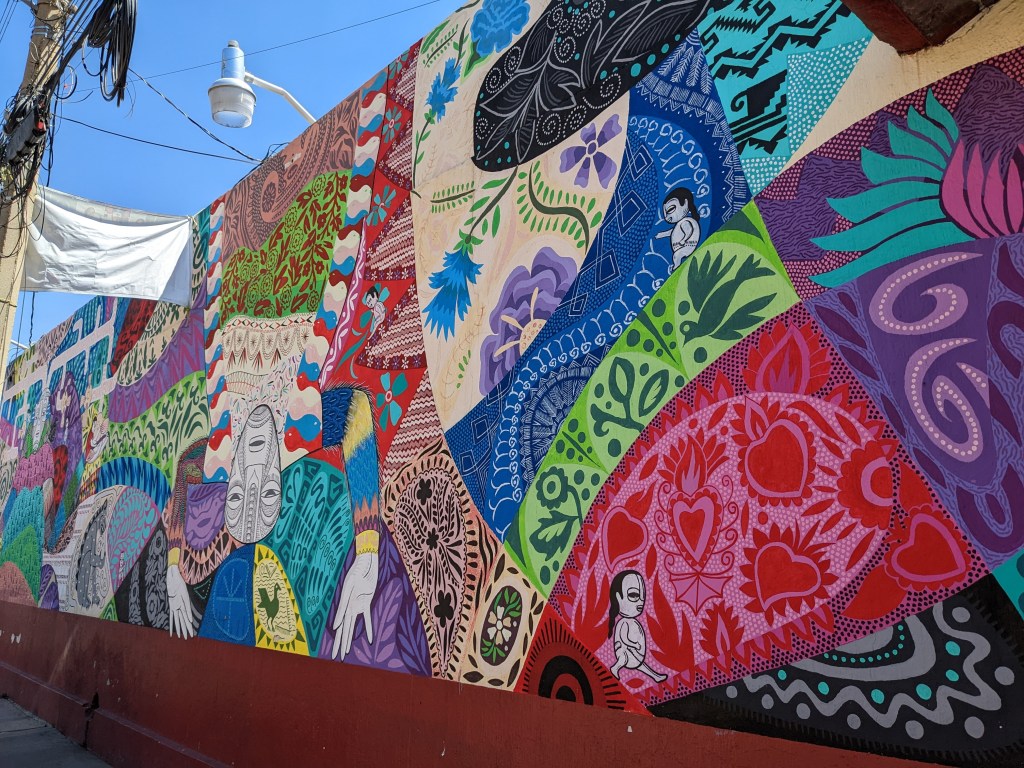
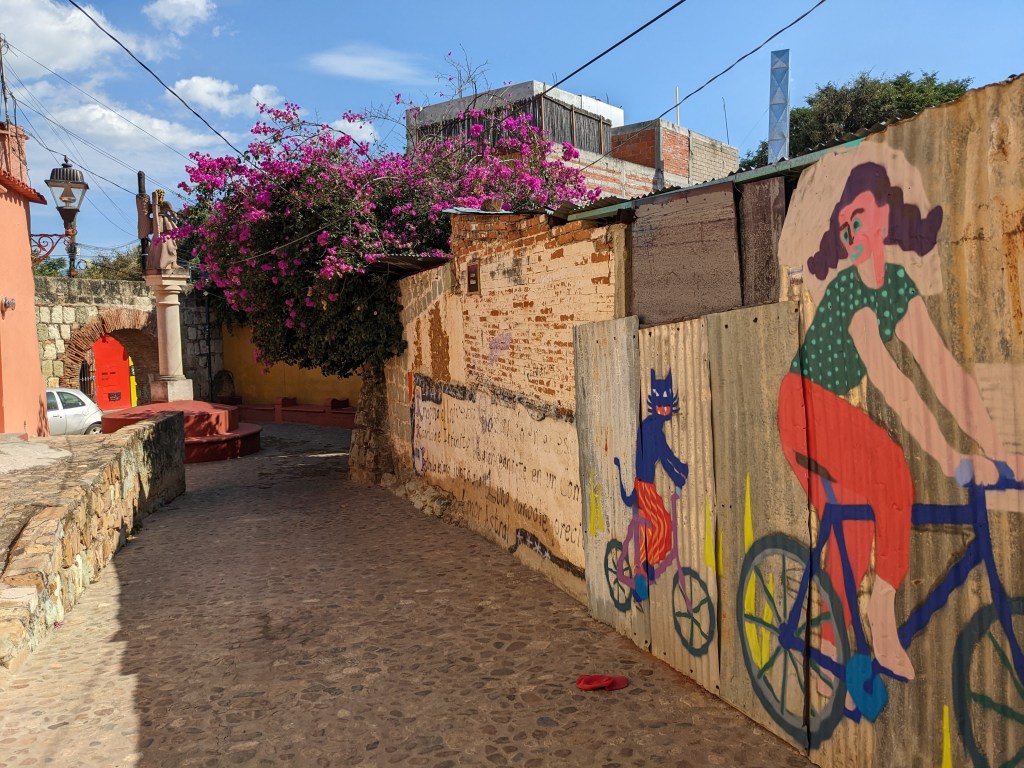
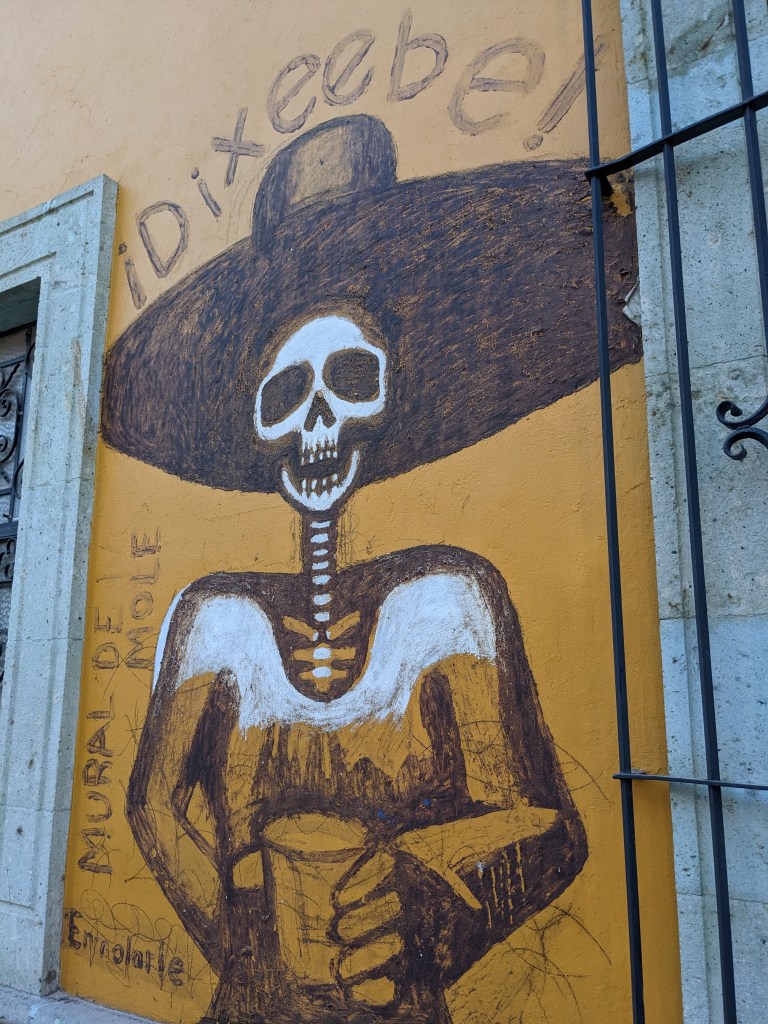
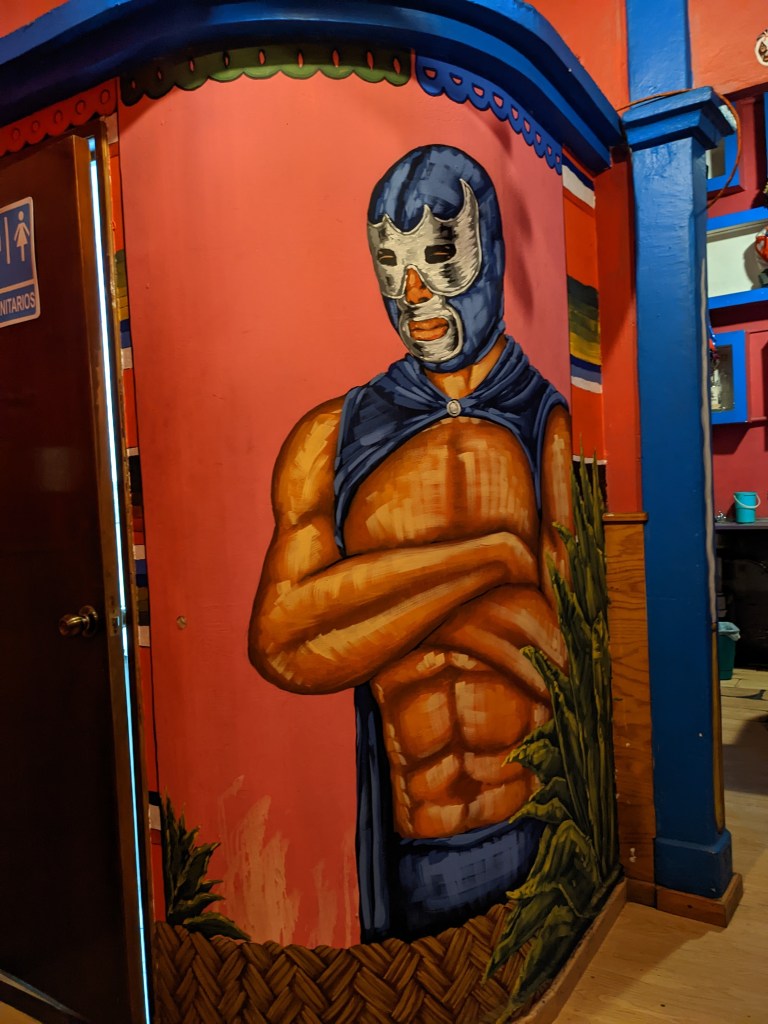
Art is everywhere here. Its not just a cliche. Buildings are painted in bright colors, with murals covering multitudes of facades. Food is crafted with such skill, hands on technique, and ancient tradition that you can taste the art in each bite.
Mezcal and pulque are both unique drinks that Oaxaca does best. Smoky with a strong punch, its likely you’ve encountered mezcal at a cocktail bar somewhere before. It’s tequila that’s been “sitting by a campfire,” meant for sipping rather than mixing or taking shots. I ordered it nearly everywhere it was offered, but the best tasting experience was at Sobrio, a speakeasy with a fully decked-out tiki bar interior and knowledgeable bartender.
If you are looking for cocktails, which we were, Xolo Cocina Estacional had a seasonal rotating set of drinks with Asian inspired flavor profiles that were deliciously different. I ordered two of the same drink, something I rarely do.
Significantly less well known outside of the region is pulque, a fermented agave sap. It’s thick, white, and stringy at times. The texture is what throws most newcomers off. It is also supposedly hallucinogenic, but I never drank enough to achieve those effects. I did enjoy the semi-sour like flavor and sipping it from a clay bowl was a cool experience as well. Since I can’t have beer, this was a great replacement for a mid-day drink after exploring the markets.
The sour flavor profile of the drink is not unique. Acidity is found everywhere in Mexico. From limes for the fatty carnitas meat, to the spicy-sour balance of a great salsa, acids are used to bring flavors to life and balance heat in a way that is just not done in American or European cuisine.

Sipping pulque in an Oaxacan bar
I came here for the food. There is no way around it. I travel for the culture, and the easiest way for me to begin to identify with and connect to a foreign place is by eating their food.
Its hard to go wrong here. Sure there are some places that cater to the white crowds, but the vast majority of food stalls, restaurants, and street carts contain incredible food that will redefine what Mexican cuisine means to you. Just like in the United States, Mexico has a great variety of regional cuisines, most of which you won’t find in a Mexican spot north of the border.
You’ve never had mole unless you’ve eaten it in Oaxaca.
Quesadillas will never be the same. One of my go-to cheap meals was nearly jettisoned from my diet completely after having the stringy melted Oaxacan cheese coated in spicy tomatillo salsa hit my mouth at Dona Ceci’s on Porfirio Diaz street. Like in Italy, the simple things that are done extremely well here.
Tlayudas are another must have street food. Called a “Mexican Pizza,” by some, they are a tostada layered with beans, lard, and some typical taco toppings to form a crunchy, rich beautiful mess of a meal.
Make sure you try as many tamales wrapped in banana leaves as possible. We found a lady on the corner selling them as we walked to the market one morning. I took a seat on a plastic stool right there in the street. Being very used to a European style cafe experience when I’m abroad, this was a revolutionary way to dine.
The yellow mole tamale nearly knocked me out with the intensity of heat. It wasn’t heat for heat’s sake, like a bad hot sauce, but instead a rich complexity of fat, heat, sour, and texture that I had never tased before. You may have seen Bourdain or someone else on TV or your computer screen eating at a street food cart, crouched on a way-too-small plastic chair, and thought “yeah, I get that.” Trust me, you don’t. Not until you’ve done it for yourself.
Our fanciest meal was definitely dinner at Origen, a restaurant operated by chef Rodolfo Castellanos, winner of the first ever Top Chef Mexico. The food was Michilen star quality.

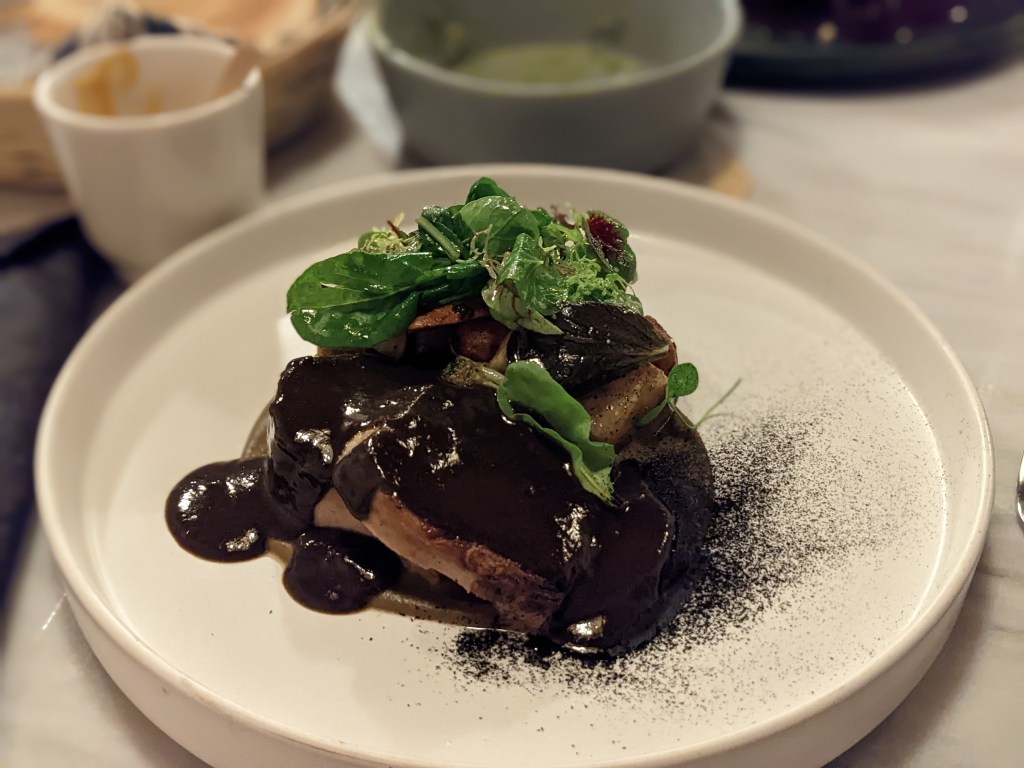

Dress it up or down, Oaxacan food is delicious. Left: Tlayuda & a shot of mezcal at a market. Center: beef toungue in mole negro from Origen. Right: chicken mole in a family resturant
In a way, nothing better prepared me for our two months in Southeast Asia than our time in Oaxaca and Mexico City. The noise, the street food, and the feeling of being thrown into an unfamiliar place, it all opened our eyes to the beauty of chaos and the joy of a truly massive global city. Plus, the spiciness of the dishes helped prepare me for the Thai food that was yet to come. To this day, for me it’s Thailand and Mexico that have the best food.
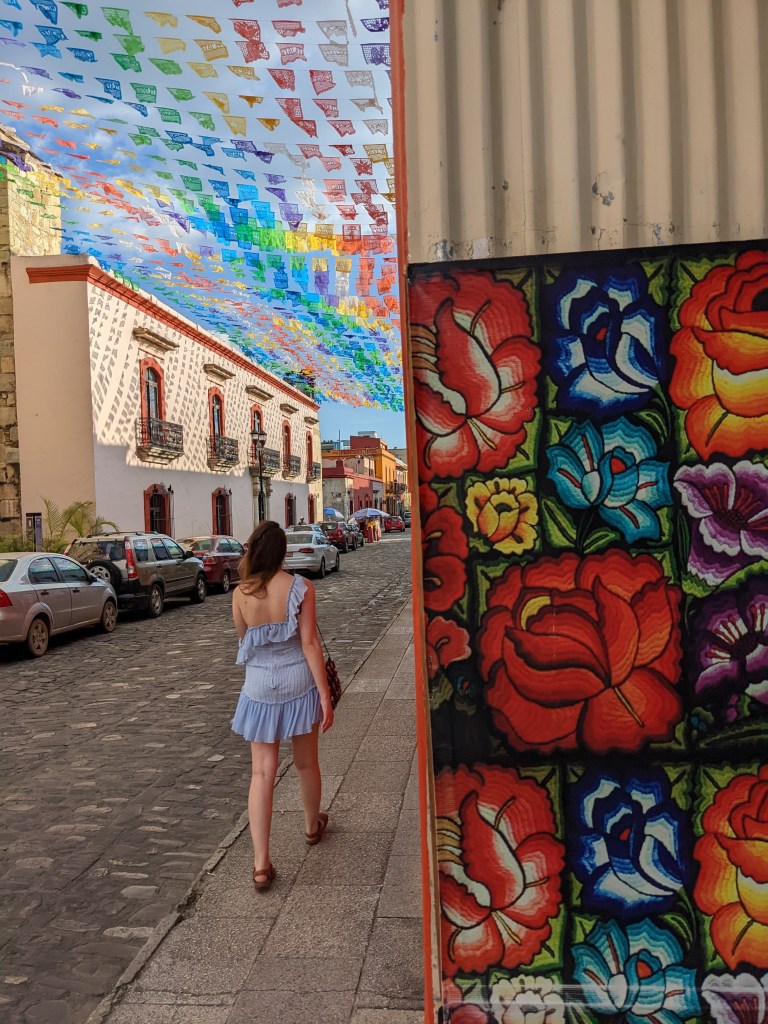
Mexico offers street food on par with the best of Southeast Asia, yet the everyday architecture of even a smaller city like Oaxaca was reminiscent of Europe. Architecture here represents a mixture of colonial Spanish, indigenous, and bright equatorial colors. There are impressive plazas alongside squat yellow, orange and pink homes and eateries. Streets are walkable, main avenues are wide, and little alleyways connect you in ways that cars simply cannot traverse. I love exploring places like this. There aren’t many public transit options, but, unless you want to leave the city, it isn’t needed all that much.


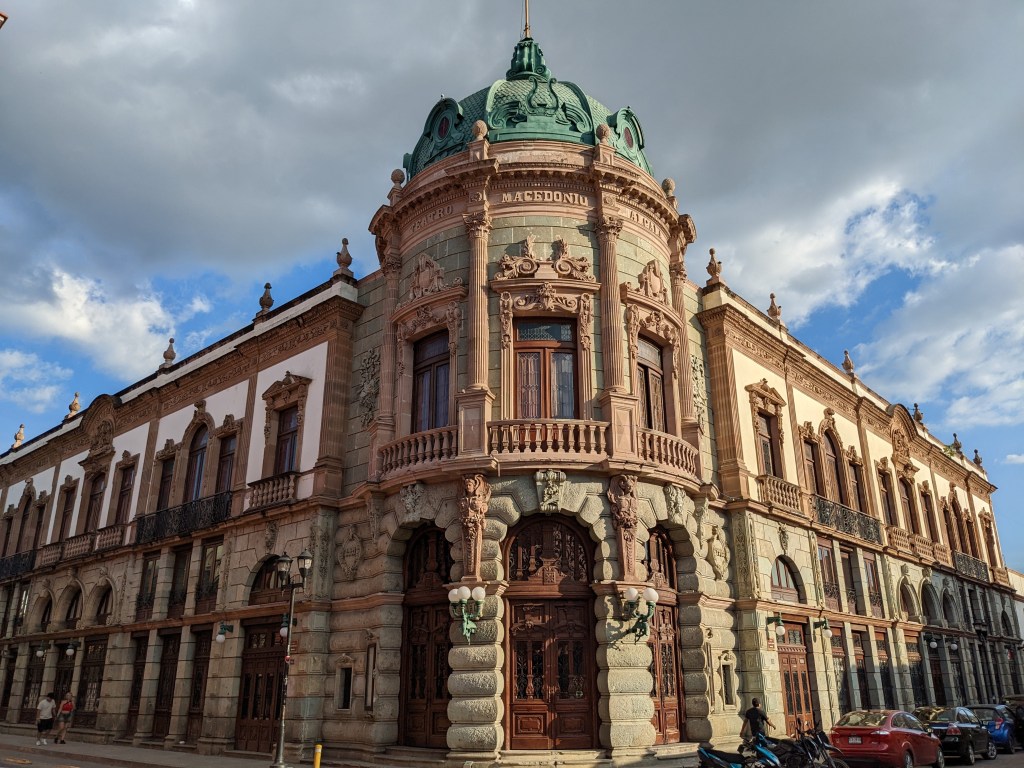

Bright colors and beautiful buildings in Oaxaca.
For many Americans, Mexico is seen as a dangerous place full of cartels, murders, and corruption.
Although there definitely is danger in existing in Mexico, it has little bearing on tourists and foreigners. Bluntly put, it’s all around bad for business to kidnap or kill tourists, especially Americans.
You’re probably more likely to encounter a violent experience in the good ol’ USA than visiting Mexico as an average American.
Fear of cultures different than your own often prevents travel, hinders connections, and obscures similarities. Breaking through that limiting and ignorant stereotype by taking a chance on a place you may have never known can be transformative. If there is one thing Bourdain taught us, it is to embrace other cultures and discard fear of your neighbors. Oaxaca encompasses this by offering an authentic experience with wildly enthusiastic opportunities.
Oaxaca City isn’t a cruise port of call. It’s not on the San Diego bachelor party tour list. It doesn’t offer all inclusive resorts like the coastal towns do, although the beach isn’t that far away. That isn’t what this place is about.
Understand this: Oaxaca is the cultural heart of Mexico. There is no better food to be found. The city is walkable, intoxicating, delicious, and safer than you may realize.




 Now We Explore