We visited Chiang Mai in March, not a busy season. This is my take-away.
Night markets come alive in Chiang Mai
I first heard of Chiang Mai while watching Part’s Unknown. Bourdain was famously fond of South East Asia, particularly Thailand and Vietnam. Similar to Oaxaca in Mexico, Chiang Mai is a food capital of Thailand. One chef in particular, simply known as “Cowboy Hat Lady” was imprinted in my memory as someone’s food I needed to try. She got her name from her distinct look, wearing a large cowboy hat, unusual outside of Texas. In interviews she says the hat catches people’s attention, and since the nickname has caught on, it is her signature look.
Chiang Mai itself is an ancient capital city in the Northern Thai highlands. The old town is shaped by four walls, forming just about a square mile. There are four gates into these four walls, each named after the cardinal directions, at least to English speakers. Cowboy Hat Lady is located near North Gate, for example. A moat also runs outside the walls, more well preserved than the walls, which are mostly gone by now. The square moat demarcates the old town from the newer parts of Chiang Mai.
My second introduction to Chiang Mai was via my best friend who was spending time teaching English in Thailand. He lived in Chiang Mai’s old town and commuted by foot to a local elementary school. His love for this city was evident, the temples, streets, food, and people made a deep impression. When Jamie and I had finally decided to visit South East Asia, we both knew this charming city would be on the top of our list to visit. It is the second largest city in Thailand, despite its small old town area, and it was the second Thai city I ever visited.
Chiang Mai is a digital nomad hotspot. This can be a good or bad thing depending on what you’re searching for. It means there are plenty of hotels, fast wifi, and it is easy to navigate. It also means it can get crowded, there are more spots catering to a foreign palette, and locals tend to get pushed out over time. Reading reports of Chiang Mai from five or ten years ago, it seems like a hidden gem of a spot just waiting to be discovered. Well, it’s been discovered. I still feel I visited at a great time, however. I never felt overcrowded to me, we were also there during a less busy time of year which makes a world of a difference.
Chiang Mai’s Culinary Scene
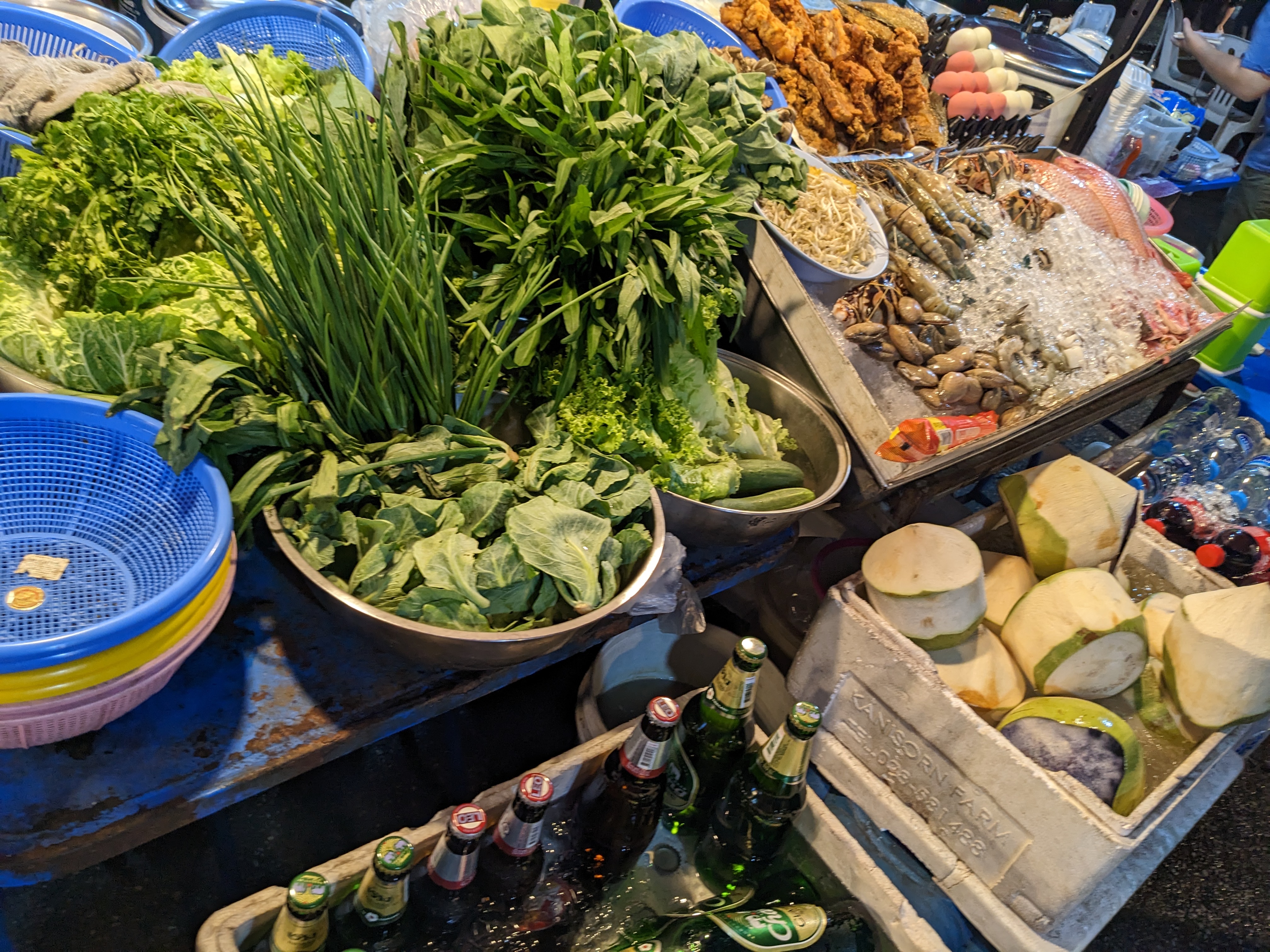
I mainly travel for culinary experiences these days. I rate locations on what they have to offer for food, beverages, and history for the most part. Chiang Mai resoundingly hits all of these marks. One of the best and most challenging things I ate, several times, was a very spicy sausage called Sai Oua. It was packed with flavorful curry spice that pushed the limits of what I could handle, and I can handle my spice! It was delicious. There was a lady in a street cart selling it just down the street from my hotel near the South West corner of the city that I particularly loved.
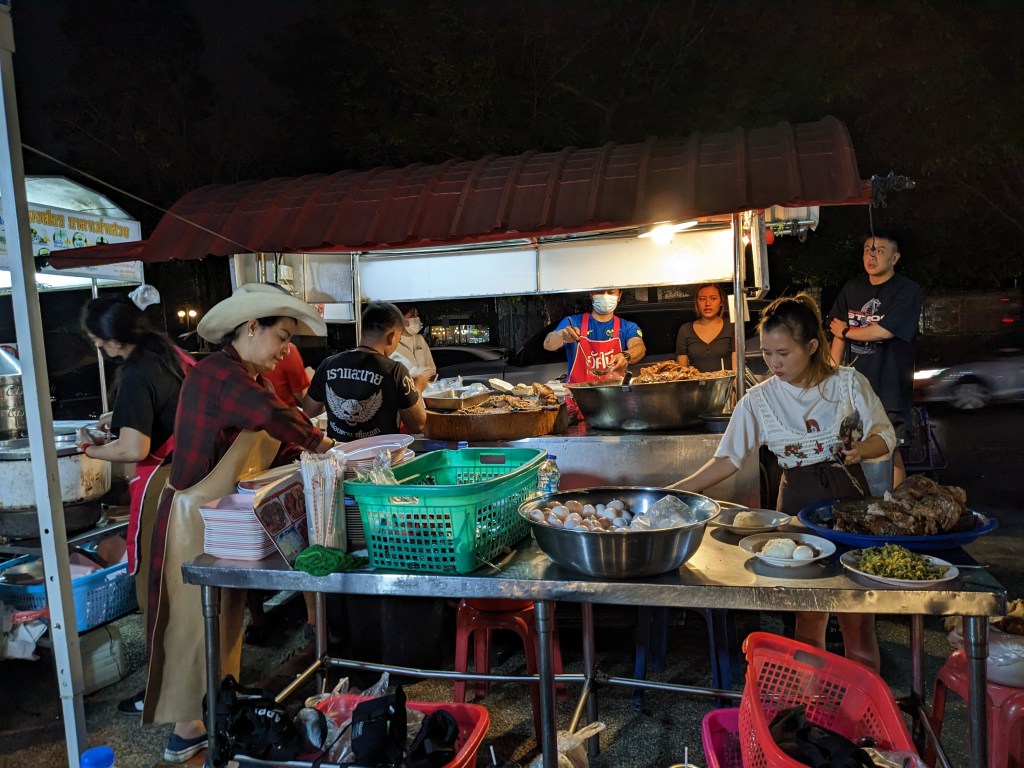
For me the magic of this place was in the night markets. Food markets specifically. The clothing, trinkets, and crafts were not as intriguing. Copycat stalls were found every few blocks selling mostly the same things. There are renowned artisans and crafts in this city, but I did not encounter them in most of the street markets I visited. The food was a different story. Incredible.
I sampled so many foods that I really have no idea what they are called. There was a desert wrapped in banana leaves, clear noodle soups, and countless grilled skewers of pork and chicken that were temptingly tender. Skewers cost about $1 each. Prices were very affordable for it being a nomad hotspot. One other downside of a place getting too popular is that prices tend to go up quickly. I did not necessarily notice that here.
Even the trendy food options like avocado toast were pretty damn good. The hotel a few doors down from where we stayed offered a great array of beverages as well. Ube and avocado smoothies were our favorites. Ube is often likened to a sweet potato, but I found its flavor profile surprisingly more like a cookies and cream shake than a Thanksgiving side. Avocado smoothies were also a saving grace when my stomach bothered me, they were filling, healthy, and easy on my system. As much as I love spicy foods, the older I get the harder it is on me.
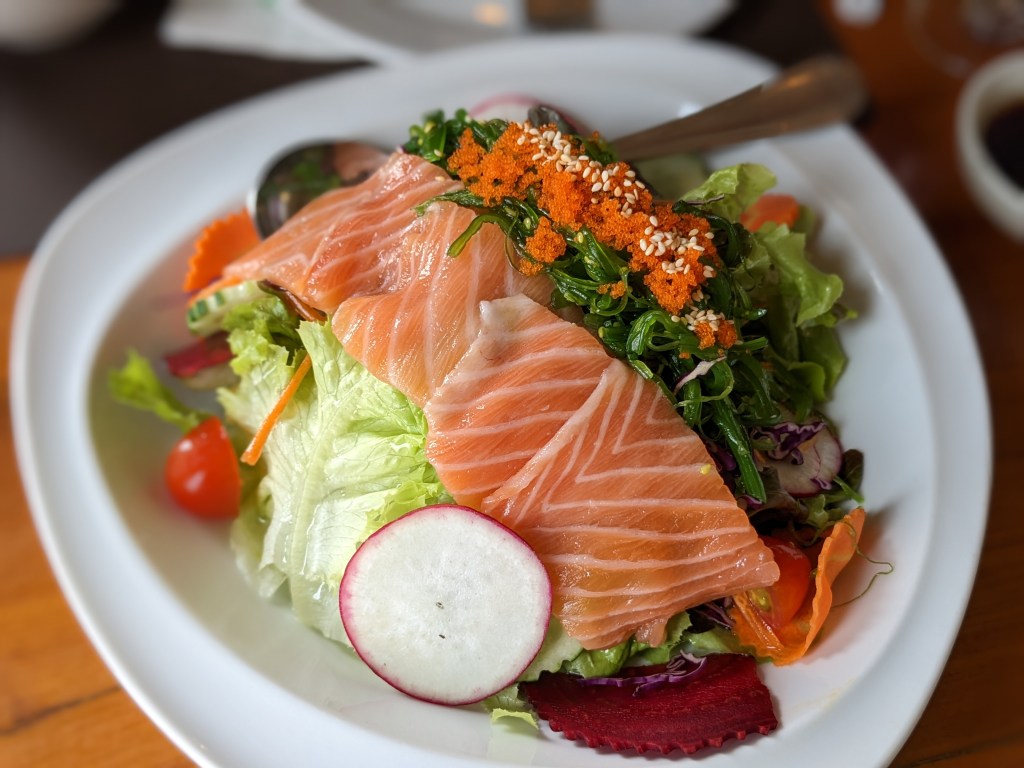
Cute cafes dotted the landscape. I was impressed by the coffee culture here, not expecting to find such unique options. Citrus coffee was something new to me, as were plenty of non-alcoholic “coffee cocktails” they offered. We even came across a coffee competition of sorts in the form of an upscale street market called “coffee week.” There was a bicycle a worker pedaled to grind beans, coffee trucks that served out of their side doors, and even a “bitter butter” coffee to try. I suppose that this region is less bound by “traditional” ways of making coffee that Europe is. For all that Europe offers in the culinary field, innovation is typically not their strong suite.
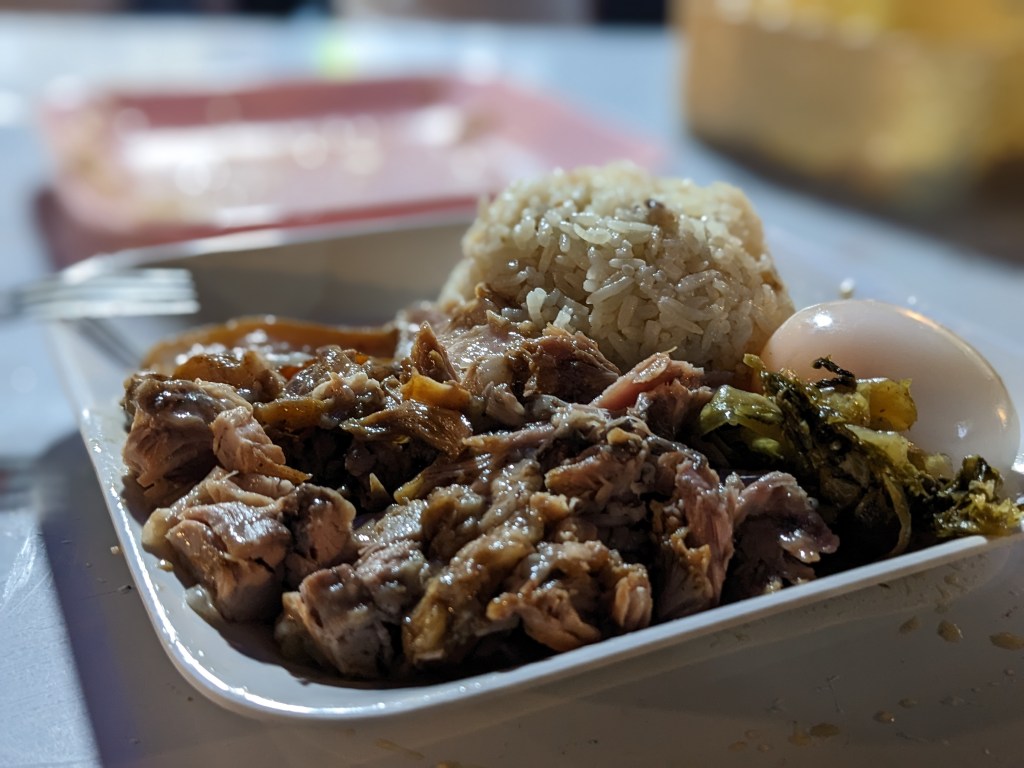
Cowboy Hat Lady’s dish was my favorite meal. I say “dish” because she only offers one thing, Chinese style stewed pork with greens, rice and an optional soft boiled egg. It sounds simple but the broth the pork is slow cooked in adds such depth of flavor that nothing else is really needed. Pork is the most common meat I found in Northern Thailand, and this was the best version of it I ever tried. I would compare it to a slow cooked carnitas, or maybe a BBQ pulled pork, but even more tender and simple. No salsa or BBQ sauce needed by any means. Anytime a place serves just a single dish, and has a line around the block, you know it will be great.
There were food markets throughout the city. I value a place that places such emphasis on what you eat. Food is one of the greatest pleasures in life, a life altering meal is truly orgasmic. It is also the best window into a culture you’re unfamiliar with. There is so much history and meaning behind what ingredients, techniques, and textures are offered.
Of course, we also found great Pad Thai, but that is not the specialty of the North. Pad Thai is a Bangkok dish, one that was actually crafted by the government as a way to sell the world on Thai food, and get them hooked to try more. It’s not that Pad Thai is bad, or inauthentic, but there is much more that this nation has to offer. Here in the highlands, Khao Soi is considered the most popular regional dish. It is a yellow curry soup with noodles and chicken. Unfortunately, I am allergic to wheat so many noodle dishes are inaccessible to me. I did sample the broth to get a sense of the flavor, and if we Westernized it and made it gluten free, I’m sure I would love it. From what I can tell, and again I can’t really eat the dish in its entirety, I think I preferred Boat Noodles to Khao Soi, but the two don’t really need to be compared. They offer very different flavor profiles and ingredients.
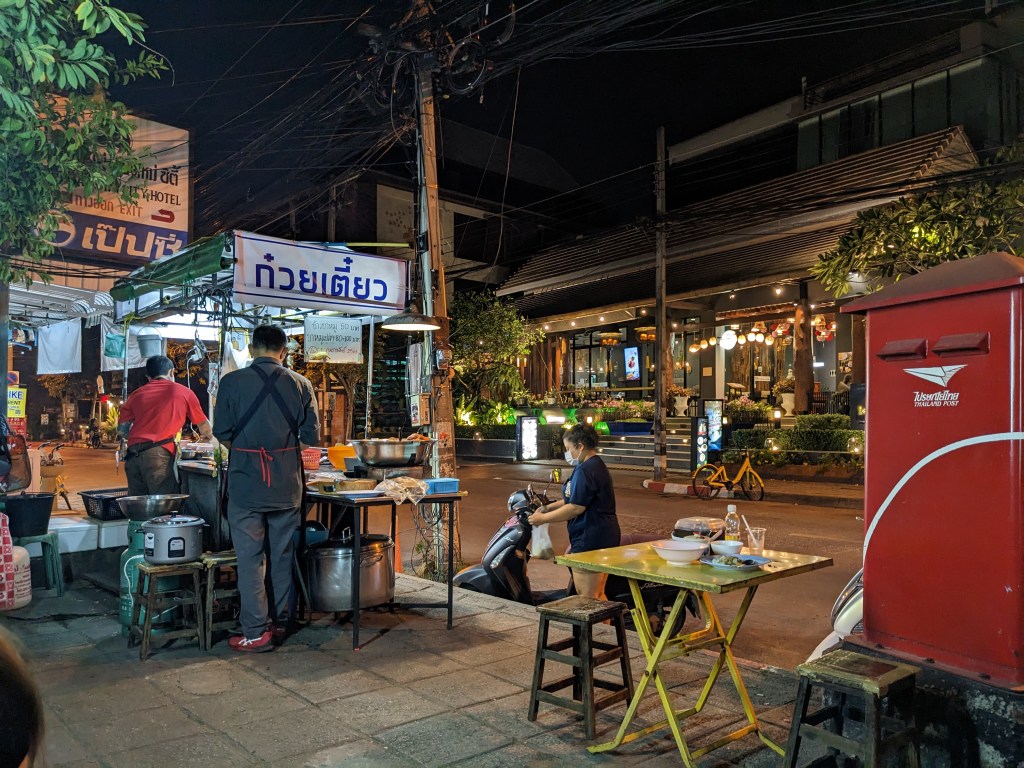
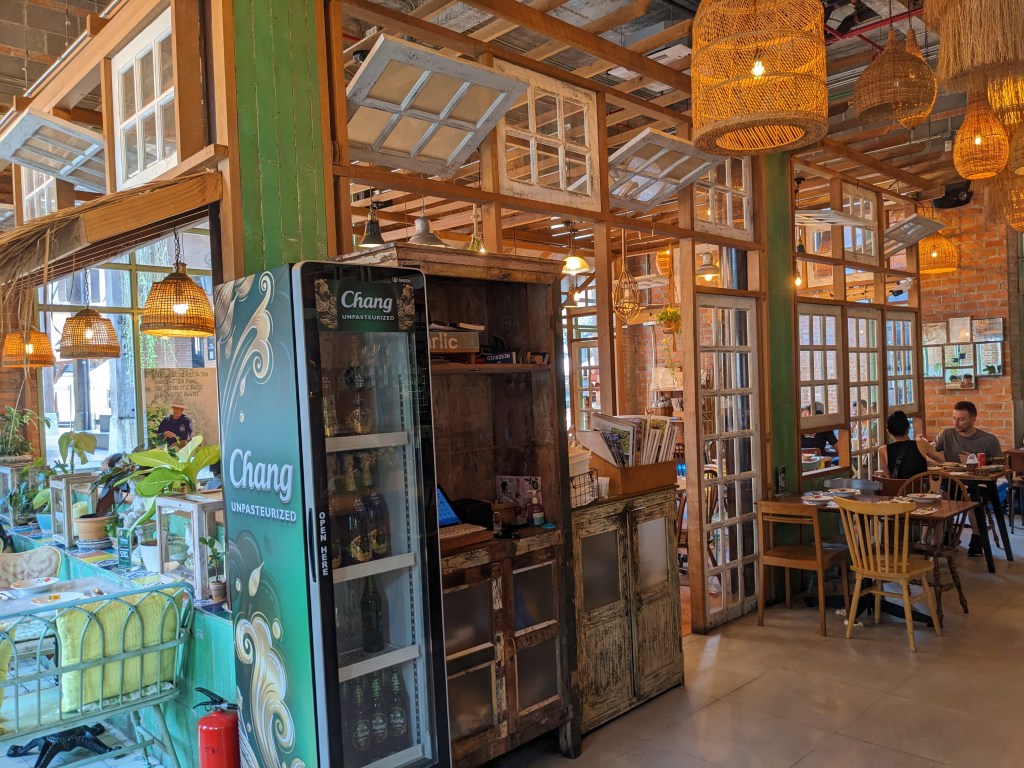
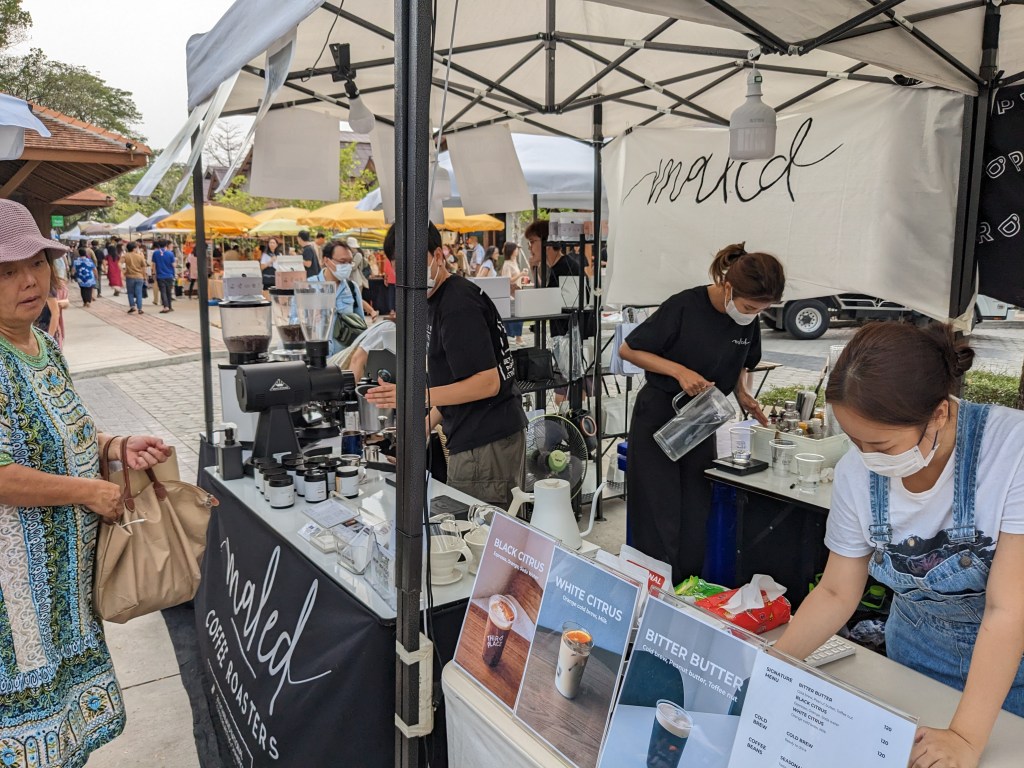
Street food, trendy cafes, Instagram hotspots, and coffee week in Chiang Mai
Because of Chiang Mai’s culinary reputation, we booked a cooking class and market tour to help round out our understanding of this region’s flavors. We were the only ones in the market tour, just Jamie, me, and a guide. It made for a very personal and intimate experience, a private tour for the cost of a regular one.
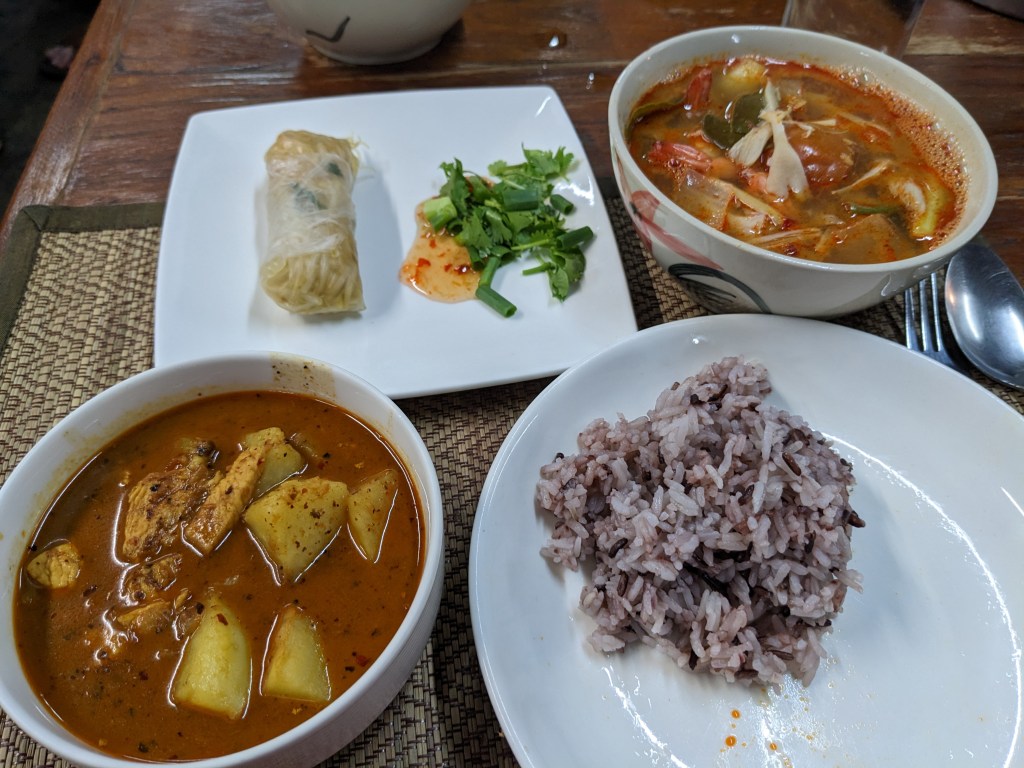
The tour and class were great introductions to a cuisine I had only eaten, never cooked. The amount of fresh herbs was impressive, thai basil, galangal, and lemongrass added bright and zesty flavor while thai limes added the perfect citrus complement. Galangal was new to me. It is closely related to ginger, but has a more pepper-y and citrus like quality. The class showed us how to use a mortar and pestle to muddle the herbs and crush in the spices. Toasting spices in a hot wok was essential to “blooming” their flavors. This was also new for me. Most European and American recipes do not require this step! Tiny Thai bird chilis added the famous heat and spice, you could add more or less depending on your preference. We made simple dishes, spring rolls, a curry, and pad thai, but they were very rewarding to complete. One note on the word “curry,” it simply means “sauce.” It can be as varied as sauces in any other cuisine. For example, Thanksgiving gravy, Italian bolognese, and Mexican mole are all “sauces.”
Ethical Elephant Sanctuary Visit
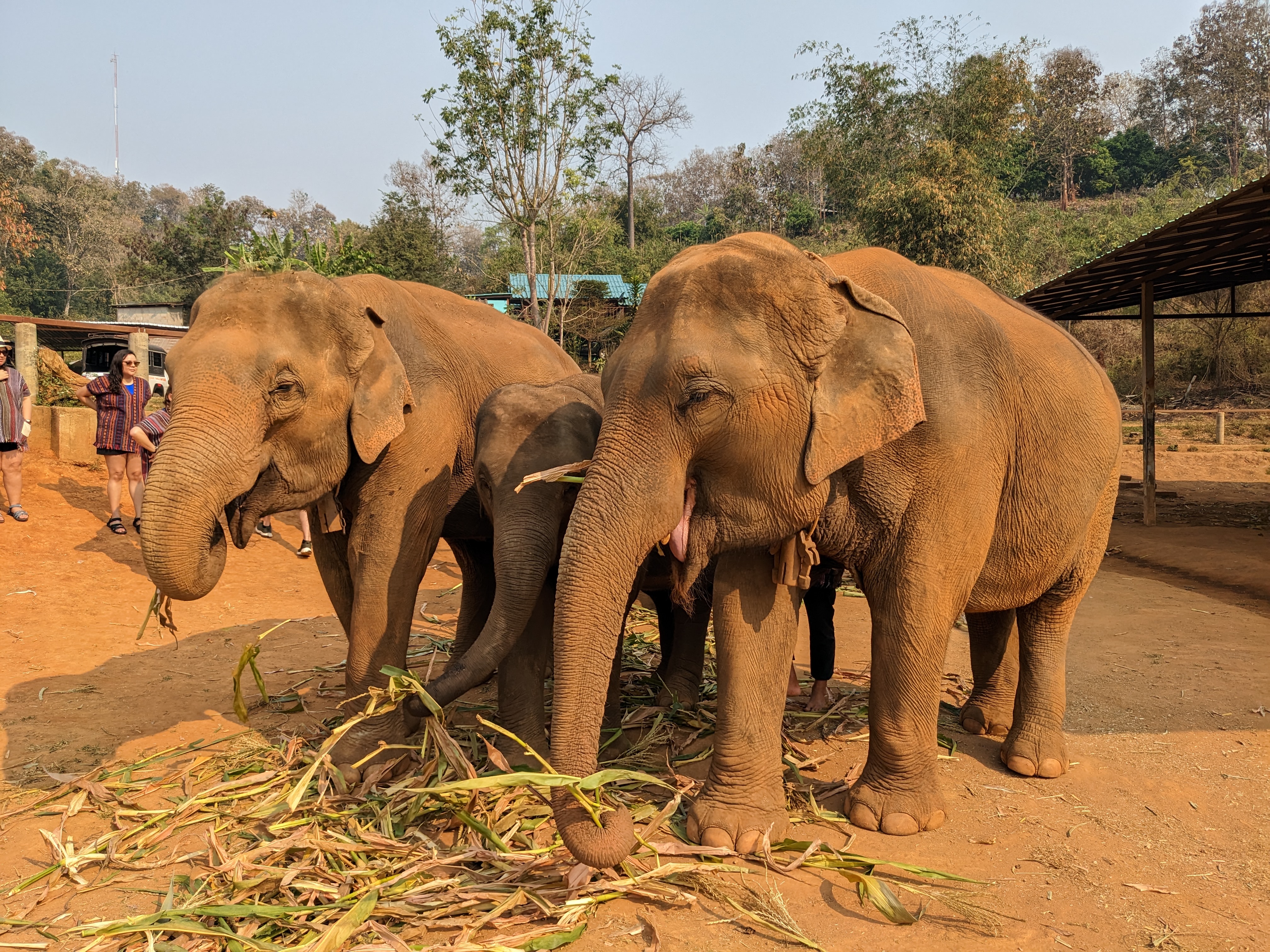
Possibly the highlight of the stay was our visit to an elephant sanctuary. We chose not to visit a place that allows elephant rides as the animals are grossly mistreated. Elephants’ skeletons and body structures are not meant to be ridden, unlike horses. In places catering to tourists especially, they are often beaten and cruelly treated in order to be compliant. There are many elephant sanctuaries that are still unethical and mistreat the animals. Places that run multiple tours a day, with nearly 50 people at a time, and allow unregulated feeding of the elephants should be avoided.
Elephants rank among some of the most intelligent animals on the planet. They seem to be aware of mortality, as some wild groups hold “funerals” or sorts for deceased members of the herd. They are some of the only animals that are able to use tools as well. Their trunks are dexterous and used as a singular arm/hand to grasp items. Elephants also use complex communication, through trumpeting of course, but also through subtler means. They can apparently recognize different individual human voices as well. I love elephants, I even got my first tattoo (back home) of an elephant on my wrist. I regret not getting any tattoos in Thailand.
Our trip to the elephant sanctuary included a long ride in a red truck, famous around Chiang Mai as taxis. Red trucks circle around the city and offer a hop-on hop-off style of transportation. They are as recognizable as yellow cabs are in NYC. Ours was destined specifically for our sanctuary tour. We shared the covered bed of the truck with another group of Americans, one who even went to San Diego State, our alma mater!
Ethical sanctuaries include activities like bathing next to elephants, feeding them, and walking next to them. They typically do not like to be physically touched by humans, so avoid places that emphasize contact. We handed them food which they grasped with their trunks, walked next to them as they moved surprisingly quietly for such large creatures. Although Asian elephants are smaller than African ones, they are still huge! We also bathed next to them as they rolled in mud and sprayed themselves with water. It was humbling and exhilarating to be sharing space with such beautiful and intelligent animals.
One of the funniest interactions I witnessed was between the herd and a specific mahout, or elephant handler. The mahout was short and stocky, barefoot, and had his hair in a bowl cut. He was much shorter than the other Thai mahouts. The elephants seemed to tease him wherever he went. They sprayed him with water which flustered him. They chose not to follow him when he was trying to guide them. His gentle frustration was evident. They would then approach and surround him, being gentle and kind as a way of making up their silly antics. I’m sure elephants have a sense of humor after watching their interactions.
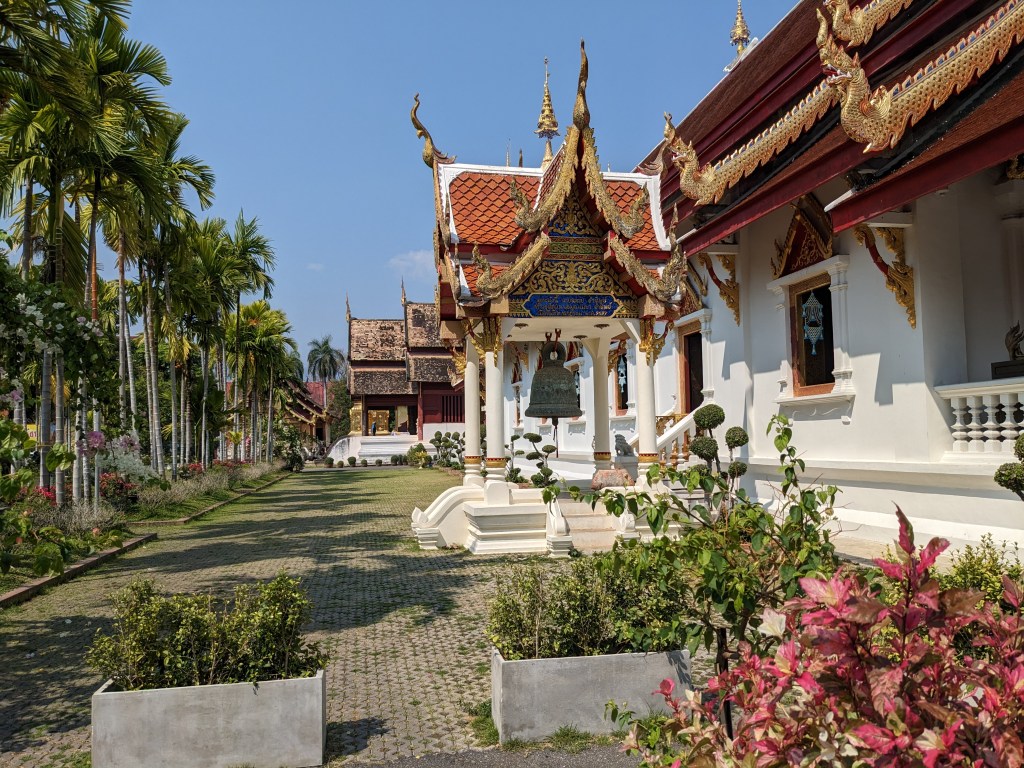
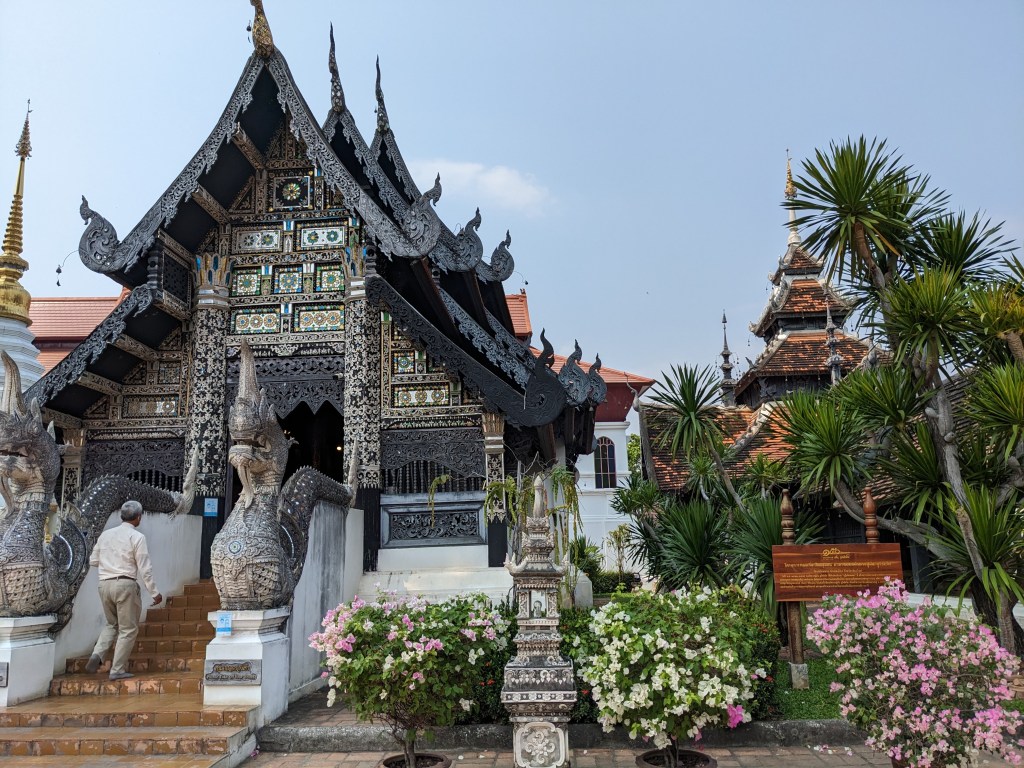
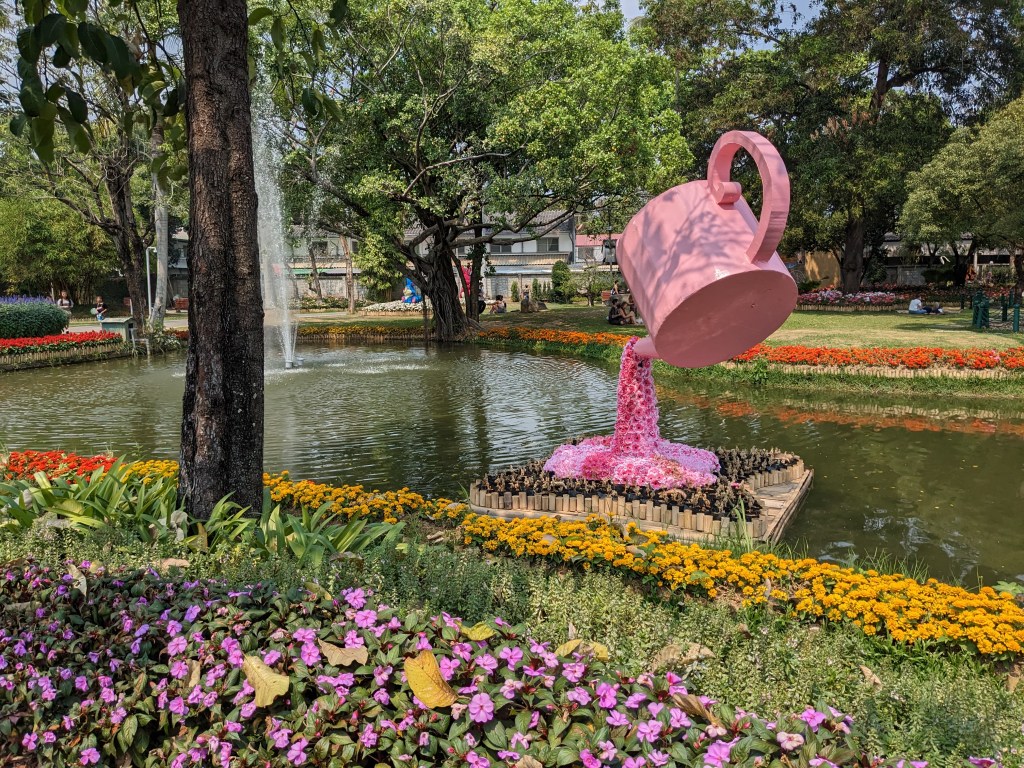
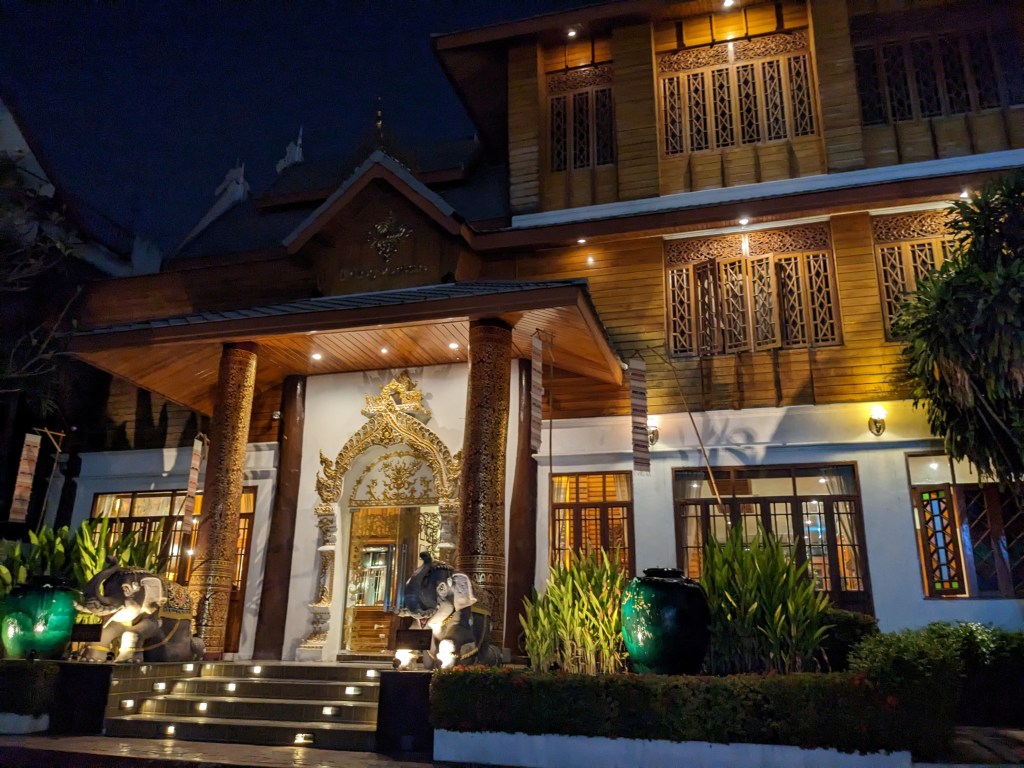
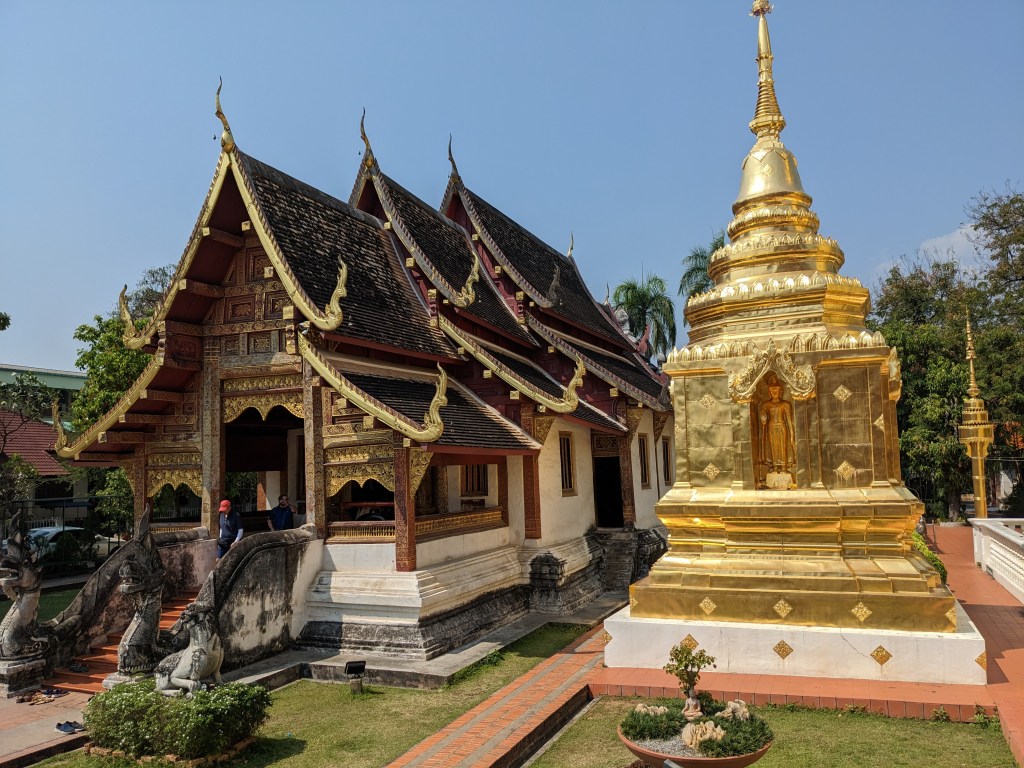
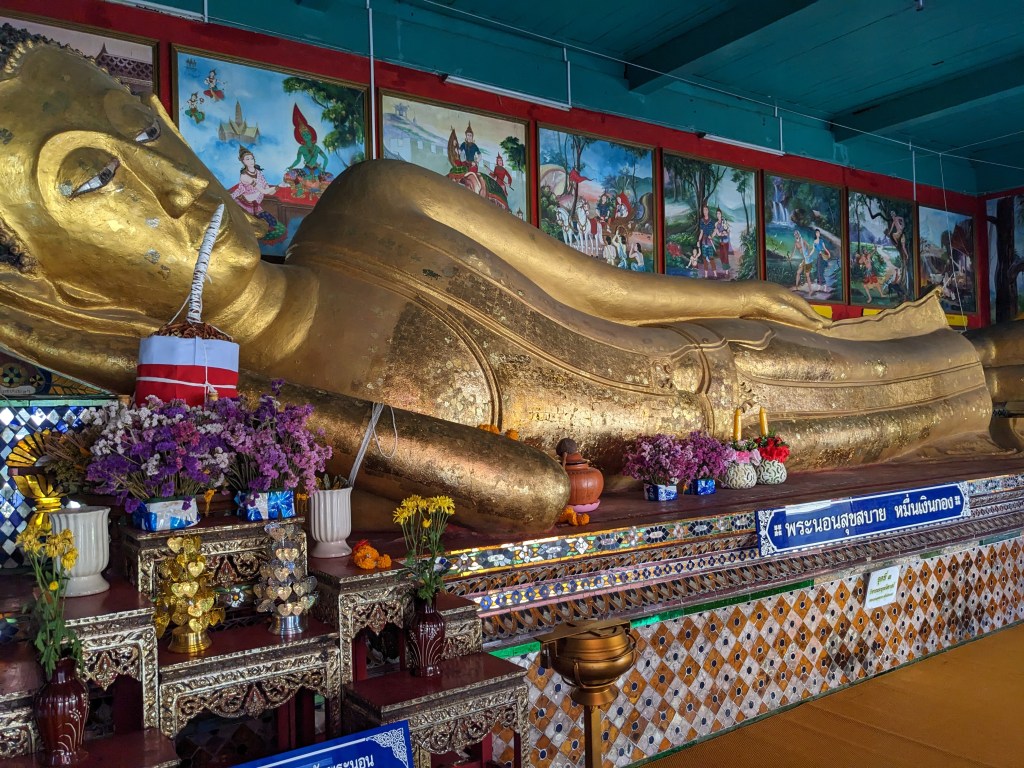
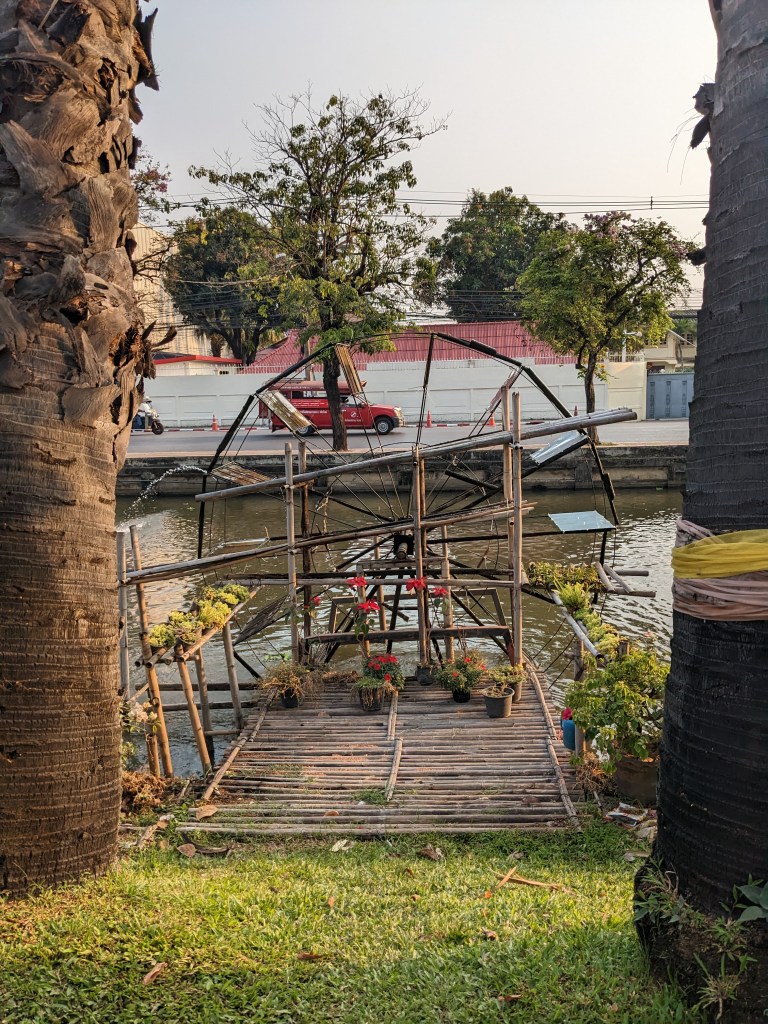
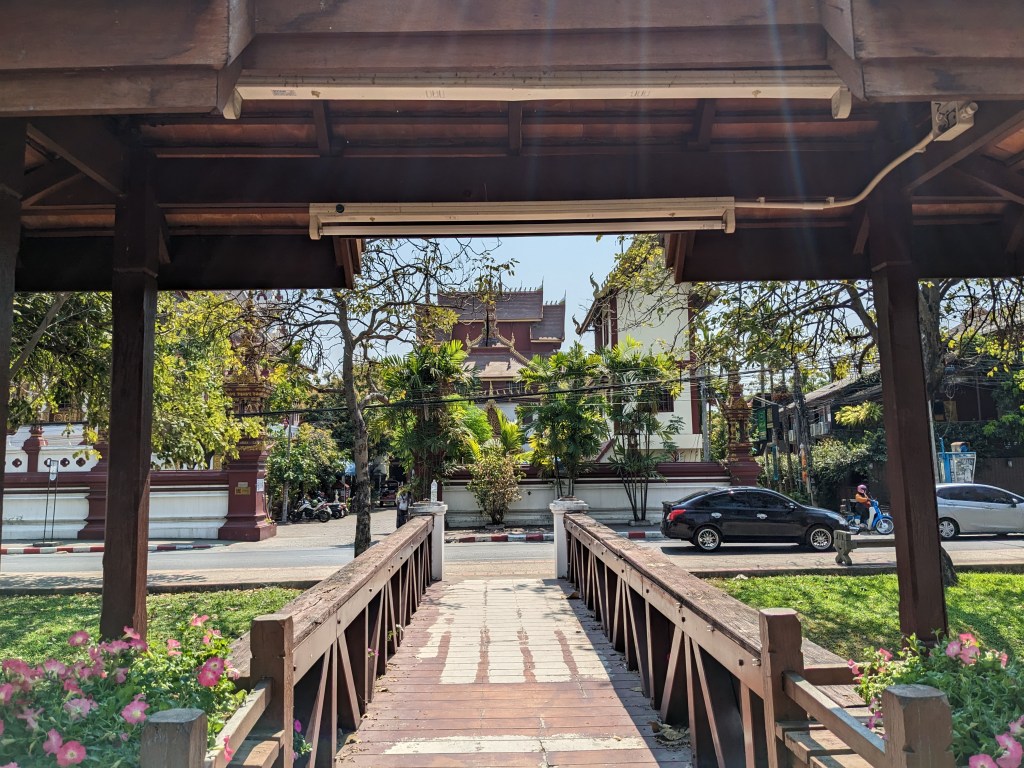
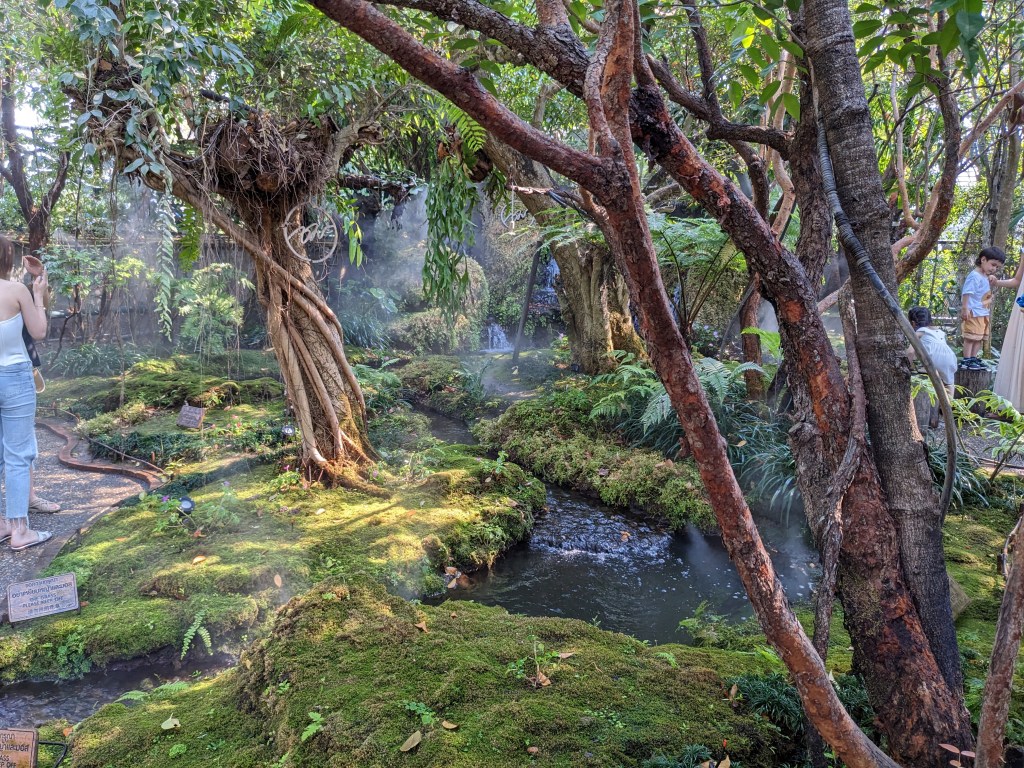
Various sites, gardens, temples, and streets of Chiang Mai
Final Thoughts: We Avoided the Crowds
Our time in Chiang Mai was coming to an end. Next we headed further north towards the Laos and Myanmar border. The temples in Chiang Mai were wonderful, but pale in comparison to what we were to experience next. We were in Chiang Mai in March which is not a popular tourist season (typically November through January) so we did not hit the usual crowds. We recommend visiting any popular destination in the “shoulder” seasons for this exact reason.
However, one downside to be aware of in this region is that March is the agricultural “burning season.” Across South East Asia the air pollution was noticeably bad. The smell of fires and smoke permeated our experience. I didn’t mind it, although I know it was not good for our health. The food, the walkability of the city, the night markets, and the accessibility and connectivity of Chiang Mai helped it live up to our high expectations. There are countless nature activities nearby as well that we simply did not have time to explore. I would return here and spend even more time in nature in a heartbeat.


